 It’s cold right now, but the winter has just started... And everybody is eating "nabe" –a Japanese style pot where many people eat by surrounding it and sharing the food. Everybody knows nabe and it is a typical Japanese food so here I am to introduce another Japanese winter food which will warm you from inside out! Oden! You might see them being sold at many convenient stores but it doesn’t have to be store-made, you could make it at your house on your own!
Showing posts with label gourmet. Show all posts
Showing posts with label gourmet. Show all posts
Tuesday, January 12, 2010
Oden
It’s cold right now, but the winter has just started... And everybody is eating "nabe" –a Japanese style pot where many people eat by surrounding it and sharing the food. Everybody knows nabe and it is a typical Japanese food so here I am to introduce another Japanese winter food which will warm you from inside out! Oden! You might see them being sold at many convenient stores but it doesn’t have to be store-made, you could make it at your house on your own!

Wednesday, November 11, 2009
MA-KU-DO
 Most people are familiar with McDonald's, with the huge "M" and the color, red and yellow, being one of the famous global food service retailer.
 Although, it may not excite many tourists when they spot a McDonald's in Japan, nor encourage them to walk into one. There are number of menu items that can only be eaten here in Japan. So here's he advice! Spending a lunch for a day at McDonald's in Japan could be the way to save money and to experience the culture through fast food!! :)
Monday, November 9, 2009
EXCLUSIVE AUTUMN TASTE
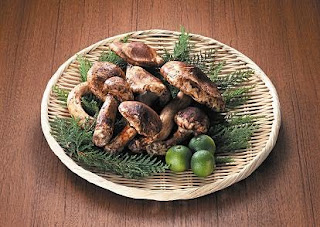 There are many expensive foods around the world, caviar, foie gras, saffron, white truffles, you name it. And there are so many to name just in Japan too, such as Yubari melon, the famous Kobe beef, and fugu (blow fish). But do you know what the most favored expensive food is during autumn in Japan? It is the matsutake mushroom.
Tuesday, October 20, 2009
BENTO BOYS
 Until a few years ago, a lunch boxes (called obento bako in Japanese) was a popular item among girls. Boys on the other hand would start buying their lunches at convenience stores or at other stores as they get older. However, this trend has begun to change since early this year. More men that work in offices are beginning to bring lunch boxes to their offices and enjoy them during their lunch time.
Tuesday, September 15, 2009
Momiji Manju -The Most Popular Manju in Japan!!-

Ask a Japanese person, "What is the most famous Japanese confectionary that is sold in Miyajima?" For sure, everyone would name the same confectionary, and that is of course Momiji Manju. Momiji manju is a maple-leaf shaped Japanese baked confectionary and is enjoyed by many tourists that come and visit Miyajima and Hiroshima area. Since it is so great both in taste and appearance, it is the most popular manju in Japan!
There is a very interesting story about how the Momiji manju became the representative souvenir of Miyajima. In the Meiji period (1868-1912), Hirofumi Ito (The first Prime Minister of Japan) frequently visited Miyajima. During one of his visits there, he saw a pretty girl's hand and said, "Your hand is like a maple leaf!" An Okami-san (female owner of a ryokan) who heard him say this came up with the idea of making a maple leaf shaped confectionary to a man named Tsunesuke Takatsu. Soon, the first momiji manju was created and sold at Takatsu's store in the small island of Miyajima. Although this story has not been proven to be true, but many long-established momiji manju shops believe in this story. Thus the tradition has been passed on for many generations.
Today, as you walk across Omotesando (a small shopping avenue) in Miyajima, you will see a lot of momiji manju shops. Some have transparent walls that allow tourists to see how momiji manjus are being made. Unlike the early years, where momiji manjus were hand baked one by one, momiji manjus today are mostly created with large machines exclusively for momiji manjus. It is extremely interesting to watch the fluffy momiji manjus coming out of the machine. In some stores you can buy a freshly baked momiji manju that just came out of those machines! The fluffiness of the dough and the sweetness of the anko are extravagantly brilliant! Pop one into your mouth and you will sure see why momiji manju is chosen by many as the most popular manju of Japan!
Other than anko, there are many other interesting fillings for momiji manjus. For example there are custard crème, cheese, chocolate, green tea, sweet chestnuts, sweet potato, mochi, almond and more. Depending on which store you visit, you can taste unique flavors of momiji manjus so why not go for a try. Usually momiji manjus are around 70 JPY to 100 JPY so it is very easy to purchase them.
Wednesday, June 24, 2009
Specialty Foods Around Japan
If asked what my favorite pastime was, I would unhesitatingly say, "eating!" Alright, so it's not the most cultured hobby out there, but food is, after all, the source of all energy and happiness!...No? Anyhow, I've previously shared some of my favorite types of Japanese foods on several occasions, such as onigiris and sakura-mochis (link to previous posts). Today, allow me to further introduce some other famous kyodo ryori, or regional specialty dishes, especially those outside the Tokyo region.
Starting from the top of Japan, if you ever find yourself in Hokkaido, don't miss Sapporo ramen and locally-made raw caramel. Sapporo, being the birthplace of miso-flavored noodles, offers the true original miso-ramen in addition to the equally popular Sapporo curry ramen. Next up, the Hanabatake Bokujo's raw caramel has stirred up quite the consumer sensation in recent years. It's not too milky, not too sweet, chewy and soft, yet not sticky—in other words, just right. Aside from the small boxes of caramel pieces, you can also find ice-cream covered with warm melted caramel. Once only available in Hokkaido, the farm company has recently opened up specialty stores in Tokyo as well, but if possible, I'd still recommend you head up to the farm to get the freshest tastes.

Moving down south into Tohoku region, Miyagi Prefecture's Sendai City might as well be a mandatory spot for gyuutan (beef tongue) lovers. Originating in Sendai in 1948, gyuutan is now a staple in all Japanese barbeque joints around the country. The thin pieces of meat are grilled to perfection within minutes, and you can enjoy the unique chewy texture of the meat in salt (tanshio) or sauce (tare) flavors.

From east to west, we'll jump from meat to more meat, as you hit Nagoya, Aichi and their famous miso-katsu. This dish is basically the renowned Japanese pork cutlets served with miso sauce, which gives it a refreshing and uniquely local twist. Also don't miss the local tebasaki, or chicken wings, which are marinated in a slightly sweet sauce and sprinkled with sesame seeds. If you're looking for something aside from meat, Nagoya is also famous for their fresh eel atop rice, in the form of savory unagi-dons.

Moving further west, stop by Shikoku's Kagawa Prefecture for a bowl of refreshing sanuki udon. This udon takes the namesake of the Prefecture's previous name of "Sanuki," and is loved for its thick, slightly stiff yet chewy texture. This type of udon is arguably the most popular in Japan, and can be eaten hot or cold, dipped or in soup, and has also spread all over the country.

While I'd love to go on, I'll stop here before I start drooling over my keyboard! Stay tuned for more kyodo ryoris in the future!
Starting from the top of Japan, if you ever find yourself in Hokkaido, don't miss Sapporo ramen and locally-made raw caramel. Sapporo, being the birthplace of miso-flavored noodles, offers the true original miso-ramen in addition to the equally popular Sapporo curry ramen. Next up, the Hanabatake Bokujo's raw caramel has stirred up quite the consumer sensation in recent years. It's not too milky, not too sweet, chewy and soft, yet not sticky—in other words, just right. Aside from the small boxes of caramel pieces, you can also find ice-cream covered with warm melted caramel. Once only available in Hokkaido, the farm company has recently opened up specialty stores in Tokyo as well, but if possible, I'd still recommend you head up to the farm to get the freshest tastes.

Moving down south into Tohoku region, Miyagi Prefecture's Sendai City might as well be a mandatory spot for gyuutan (beef tongue) lovers. Originating in Sendai in 1948, gyuutan is now a staple in all Japanese barbeque joints around the country. The thin pieces of meat are grilled to perfection within minutes, and you can enjoy the unique chewy texture of the meat in salt (tanshio) or sauce (tare) flavors.

From east to west, we'll jump from meat to more meat, as you hit Nagoya, Aichi and their famous miso-katsu. This dish is basically the renowned Japanese pork cutlets served with miso sauce, which gives it a refreshing and uniquely local twist. Also don't miss the local tebasaki, or chicken wings, which are marinated in a slightly sweet sauce and sprinkled with sesame seeds. If you're looking for something aside from meat, Nagoya is also famous for their fresh eel atop rice, in the form of savory unagi-dons.

Moving further west, stop by Shikoku's Kagawa Prefecture for a bowl of refreshing sanuki udon. This udon takes the namesake of the Prefecture's previous name of "Sanuki," and is loved for its thick, slightly stiff yet chewy texture. This type of udon is arguably the most popular in Japan, and can be eaten hot or cold, dipped or in soup, and has also spread all over the country.

While I'd love to go on, I'll stop here before I start drooling over my keyboard! Stay tuned for more kyodo ryoris in the future!
Monday, June 22, 2009
Monjayaki

Monjayaki is a dough-like food made of flour, dashi (broth), vegetables, and any fish or meat. The ingredients are first finely chopped, diced, and well-mixed together before being grilled on a hot plate. Perhaps it's easier to describe monjayaki as the more liquid, runnier version of okonomiyaki.
Monjayaki is mainly served in the Kanto area and not many Japanese people know of its existence and how it is made outside the Kanto area. While it is major in the Tsukishima area (Tokyo), it is almost never seen in the Osaka area, where okonomiyaki is a prominent delicacy.
The monjayaki itself looks quite grotesque with a dark brown and mushy glob mixed with the variety of ingredients. Although it may not look too appetizing, the taste is truly magnificent! It's one of those uniquely Japanese foods such as; natto (fermented beans), karinto (fried brown-sugar stick), uni (sea urchin), which look grotesque yet have the taste of wonder.
There are two types of traditional monjayaki, the sauce monja and the shiro monja. In sauce monja, sauce is mixed with the batter itself and grilled on the hot plate, whereas shiro monja is a type of monja which only mixes salt in the batter itself. Shiro monja's "shiro" means white, referring to the image of "salt."
If you are challenging enough and don’t mind how your food looks, I guarantee you will love this! Start "monja-ing" today, because this tastes absolutely GREAT!
Monday, June 15, 2009
Okonomiyaki
 Okonomiyaki is a Japanese pancake-like food where many vegetables, fish or meat are mixed. While described as pancake-like, it's not a dessert and is eaten for dinner or snack. There is not an "official" type of okonomiyaki—the word “Okonomi yaki” speaks for itself, since “okonomi” means “whatever you like” and “yaki” means “grilled” so in other words, it's simply grilled pancake with whatever you like.
One thing most okonomiyaki have in common is the sauce. Usually most okonomiyaki are eaten with mayonnaise and tonkatsu or okonomiyaki sauce, with some shredded red ginger and aonori (dried seaweed flakes).
Okonomiyaki also differ by areas in Japan. The two major area-based okonomiyaki are the Kansai area version and the Hiroshima area version.
Kansai Area:
Kansai okonomiyaki is a traditional pancake type where you mix everything in one bowl and grill it at once. The batter is made of flour, grated yam, dashi (broth), eggs, shredded cabbage, and mixed-in ingredients usually contain green onions (chives), meats, octopus, squid, or dried shrimp. In recent years there are more modern types of okonomiyaki which include kimchi, cheese or even mochi inside. Okonomiyaki is quite a symbolic meal in the Kansai-Osaka area and could even easily be called the “soul food” of Osaka.
Hiroshima Area:
Hiroshima's okonomiyaki has just about the same ingredients as the Kansai version, but instead of mixing everything together, they layer it. They first grill the batter, then the cabbage (3 to 4 times the amount of the Kansai version), then the pork or whatever other ingredients you favor. Then the grilled ingredients are wrapped with noodles and eggs like a Western omelet. The order of cooking might slightly differ by area, but Hiroshima people believe that this is the true way to make okonomiyaki.
Monday, May 18, 2009
Monja-Yaki
 When you first look at this food, you might think "What is this!?" That sloppy-looking food is called "Monja-yaki" and it is a popular food for people in Japan, mainly in the Kanto region.
Monja-yaki is an absolutely easy-to-make and delicious-to-have type of food. As you can see from the picture, the brown part is what you might call the dough. It is created by basically mixing water, flour and Worcester sauce. The ingredients are usually cabbage, small shrimps, squid, and pork slices, but nowadays there are numerous original recipes. (Ingredients include kimchee, cheese, mochi, cod roe, and etc.) Here, I will briefly introduce to you how Monja-yaki can be made at home. All you need is a grill and the desire to make a delicious Monja!
1. Fry all of the ingredients on the grill and chop them in to small pieces with a metal spatula.
2. When the ingredients are well-fried, create a circle on the electric grill with the ingredients.
3. Make an "O" shape with the fried ingredients and pour the dough into the center.
4. When it is heated well, mix everything together.
That's it! Easy isn't it? To eat Monja, people use a small metal spatula and eat directly from the electric hot plate in front of them. It is usually enjoyed by eating it with a group of people.
Since the dough is very thin - unlike an Okonomiyaki - Monja will burn easily. Despite this, it is still soft and this is what most people enjoy. In addition, the ingredients are crunchy due to the thin dough, so the balance of the dough and the ingredients are an important criterion for determining a "good Monja".
There is a place that I recommend where you can eat great Monja-yakis. That is a place called Tsukishima. Tsukishima is located in the Chuo Ward of Tokyo and is famous for having many Monja restaurants. It even has a street called Monja Street! As soon as you set foot into this street, you will be surrounded by the delicious smells of Monjas. Numerous Monja stores are lined up along this street and they compete over who makes the best Monja. (That is why they are all so delicious!) When you enter a store and ask a person at the store, they will teach you how to make a Monja. So don't be afraid to order a Monja that interests you!
Ready to eat a nice Monja? Let's give it a try!
Monday, April 20, 2009
SUSHI TERM
 Learning the less common sushi terms at sushi bars will make you look both sophisticated and as if you are a regular of the bar.
Those terms are:
Akami - Lean tuna. A fishes' red parts. Often used for maguro.
Agari - Green tea. Agari means "goal" in Japanese board games, and since you usually drink tea at the end of a meal, the term is used.
Geta - The board where you put the sushi on. This is because the board looks like the wooden sandal, geta, worn by the ancient Japanese.
Gari - The ginger placed on the side. It is called gari because it makes the sound "gari gari" in your mouth. It's eaten to refresh your mouth after each sushi, like those coffee beans at perfume stores.
Murasaki - Soy sauce. Murasaki also means purple and because the color of soy sauce looks like a deep tone of purple it is called murasaki.
Nama - Raw. Used as a prefix to the name of a fish, a shell fish (like oysters), or something usually cooked.
Oaiso - Check please.
Odori - Alive. Odori normally means dance in Japanese. When the fish is sliced just right to eat alive, it jumps around and since it looks like as if the fish is dancing it is called odori.
Sabi nuki - No wasabi please. Sabi is an abbreviation for wasabi.
Shari - Rice.
Wasabi - Wasabi.
Example of Usage:
"May I have an akami-sabinuki,-with a little bit of gari on the geta."
"May I have cod fish's odori and nama-oyster with murasaki and wasabi on the side?"
"Oaiso, and agari please."
Thursday, March 19, 2009
Sakuramochi - A Spring Snack for Everyone
 When spring is just around the corner, many Japanese people enjoy eating Sakuramochi -a traditional "wagashi" (Japanese confectionary). When visiting Japan in the spring, you may see Sakuramochi in many places. This time, I will offer you with some basic information about Sakuramochi.
A typical Sakuramochi is anko (bean paste) wrapped in dough that is wrapped once again with a brined cherry blossom leaf (as seen on the picture). This confectionary has been eaten since the 1700s and there are two types of them. One is called Chomeiji (Kanto Style) and the other is called Domyoji (Kansai Style).
The differences between the two are the ingredients used to make the mochi's pink dough and its shape. Chomeiji Sakuramochi are made using regular flour and usually shaped like waffles. On the other hand, Domyoji Sakuramochi are made using a special powder called Domyoji powder and shaped like a straw rice bag. Domyoji powder is steamed mochi-gome (sticky rice) that is later dried and ground. It is different from other mochi because of its lumpier texture. In eastern Japan (Kanto Area), Chomeiji Sakuramochi is more familiar to people and is also sold in convenience stores. In western Japan (Kansai Area), people are not familiar with the Chomeiji Sakuramochi and prefer the Domyoji Sakuramochi instead.
Surprisingly, most people do not even know that there are two different types of Sakuramochi. Recently, however, it is not difficult to find a Domyoji-style Sakuramochi in the Kanto area.
Another interesting fact about Sakuramochi that is common in all areas of Japan is the use of brined cherry blossom leaf. Although it is not popular, those who like it say that the saltiness of the cherry blossom leaf complements the sweetness of the anko that is inside. This varies between people, so go ahead and taste one yourself!
Why not enjoy a nice hanami (cherry blossom watching) with a delicious sakuramochi as a snack??
Thursday, February 26, 2009
Essential food for the Japanese
 What is a popular Japanese food that Japanese people love to eat when they are a bit hungry or when they need a quick lunch? Sushi? Soba? No! Rice balls! Rice balls are a must have food for the Japanese and it definitely wouldn't be an exaggeration to say that there are no Japanese living in Japan that have never eaten a rice ball in their lifetime.
History
The first rice balls in Japan were found to be eaten during the Yayoi period (500 BC to 300 AD). They were made by mixing water and rice but made the same way: making it into a ball with your hands. The form of the rice balls we have now first appeared as a wartime food. They were first eaten only by warriors. However, they became more popular among farmers as a quick meal and were also served when welcoming guests. The word Onigiri (rice balls) comes from the word Nigiru (to hold) in Japanese.
Various rice balls
Rice balls are definitely one of the most popular items that are sold in Japanese convenience stores. As you walk into the obento (lunch box and take-outs) area, the first thing you will see is a whole shelf full of rice balls. The prices start from JPY100, and there are so many that it is difficult to choose the one you want to eat. Here are 10 most popular rice ball fillings at Seven-Eleven.
01. Shake (salmon)
02. Tarako (red roe)
03. Tuna and mayonnaise
04. Mentaiko (cod ovum)
05. Konbu (kelp) 6. Ume (pickled plum)
07. Katsuo/Okaka (dried bonito)
08. Takikomi Gohan (mixed rice)
09. Yaki Onigiri (toasted rice balls)
10. Tenmusu (tempura)
Other interesting fillings are, Natto (fermented beans), Kimchi (Kimchee), Cheese and bacon, Shirasu (dried young sardines), Ikura (salmon roe), Takana (Japanese pepper leaf), Miso-chashu (fermented soybean paste with roast pork) etc.
You may have heard some of them for the first time and they may sound unique or rather strange. However, go for it! You can find a lot more flavors anywhere in Japan! There are even stores in Japan that specialize in rice balls. In such stores there are nearly 40 different varieties of filled rice balls. Trying as many rice balls as you can is always recommended. I hope you find your favorite rice ball!
Friday, January 30, 2009
Japanese liquor - Sake
 Almost all areas in the world have their own distinct alcohol. For Japan, one such alcohol would certainly be sake/nihonshu, or in other words, Japanese liquor.
Basic information
Nihonshu is a traditional Japanese alcohol made from fermented rice, made mostly in northern Japan. It is made under strict conditions by professional toji (Nihonshu makers) to achieve the flavor of their dreams. Nihonshu can be enjoyed in various temperatures from 5 degrees Celsius to 60 degrees Celsius. Drinking it hot is known as atsukan, drinking it cold is hiya/reishu. Similar to wine, nihonshu's flavor changes with age, so you can enjoy different flavors even with the same brand.
Health
Generally, alcohol is likely to have an image of being unhealthy. That does not always apply to nihonshu. It is said to enhance blood circulation, and to relax stiff areas of your body. However, please be aware that drinking too much is not recommended. If you don't like drinking it, enjoy it another way by taking a nihonshu bath! Just adding two or three cups of nihonshu into a filled bathtub will warm you to the core of your body.
Now, why not go outside and grab a Nihonshu of your own?
Wednesday, December 31, 2008
The End of the Year in Japan: Toshikoshi-soba
 There are many original rituals and custom in Japan. And today we have "toshikoshi-soba". Toshikoshi-soba is a bowl of noodles eaten at the end of the year. The ingredients differ with each house, but most families living in Japan eat soba during the year-end countdown.
You might wonder why is it not any other type of noodle such as; udon, or pasta or ramen? Why soba? Well, it is said that soba is thin and longer than any other types of noodle. And by eating this, it was said that one can gain long lasting life and long lasting health. Till this day the ritual and the legend has been believed and many family eat the noodle together.
How to make Toshikoshi-soba
Step1: Cut chicken meat and chives into small pieces.
Step2: Pour water into a pot and bring it to a boil. When the water boils, place in the chicken pieces and the chives. Turn off the stove when they are cooked.
Step3: In another pot, bring the water being used to cook the soba to a boil.
Step4: When the water boils, put the soba into the water and wait until they are cooked, but firm (follow the directions on the soba package).
Step5: Place the noodles into a bowl and pour in the soup made earlier with the chicken and the chives.
Step6: If you wish, you can add shichi-mi (Japanese mixed chili pepper powder) on top, and the Toshikoshi Soba is ready to be served.
Subscribe to:
Posts (Atom)
Related Posts
