Friday, September 4, 2009

Enjoying Enoshima! –Samuel Cocking Cemetery-


Enoshima is an island that is located at the edge of Kanagawa Prefecture. Though a small island that is connected to the mainland with only one bridge –Enoshima Ohashi-, it is a wonderful place for relaxation and enjoyment. Today, I will introduce you one area here in Enoshima that I definitely recommend you to visit.

Enoshima Samuel Cocking Cemetery
This is a cemetery located in Enoshima that was built by an Irish trader, Samuel Cocking in 1882. Today, there remain many different varieties of flowers and trees and has become a city-run cemetery enjoyed by many people around the area. What I also recommend in this cemetery is the Enoshima Tenbodai (Enoshima Observation Deck). This observation deck is located inside the cemetery and has a very unique appearance as seen on the picture above. After climbing it using an elevator, you will reach the deck where you can enjoy a 360 degree view from a height of 41.75 meters. The view from here, I can truly say is outstanding! On one side of the deck, you can see the wide view of the Sagami Bay that reaches out for miles. From a different side of the deck, you can see Mount Fuji in the distance on a beautiful sunny day. On another side of the deck, you can see the city of Odawara, Kamakura, Zushi and many more famous areas in Kanagawa Prefecture. The Enoshima Bridge, the beautiful and long coast and, the cities make a great balance and is a very enjoying view to see. An outdoor deck can be enjoyed as well.
Entrance to the cemetery is JPY 200 and entering the observation deck is JPY 300. Thus, you can enjoy two places in Enoshima just with one Japanese coin!! (You know there is a 500 yen coin, don’t you??)

Looking for relaxation and enjoyment? Why not enjoy the Samuel Cocking Cemetery in Enoshima on a nice summer day!

Thursday, September 3, 2009

Gotochi Kitty! – Hello Kitty All Over Japan!-


I bet most of you readers know the character, Hello Kitty. It is a cat mascot by Sanrio that has been loved by many people all over the world!!

Today, I will recommend you "Gotochi Kitty". Gotochi in Japanese means "Local" and Gotochi Kitty is Hello Kitty dressed up in traditional or symbolic styles that represent many areas of Japan. Usually there are about five or six different varieties of Gotochi Kitty for each prefecture of Japan. Most Gotochi Kittys are attached to pens or straps for mobile phones Here, I will introduce to you some of the Gotochi Kittys that you can purchase when you make your visit to several prefectures of Japan.

Here are some examples of what you can find…

Hokkaido Kitty – Lavender Kittys, ikura (cod roe) Kittys, soup curry Kittys, marimo (spherical moss) Kittys etc. (In just Hokkaido, there are approximately 20 different types of Gotochi Kittys.)

Kanto Gotchi Kitty – Tokyo Dome Kitty, Tsukiji Kitty, Tokyo Tower Kitty, Asakusa Kitty, Monja Kitty, Hato Bus Kitty, etc. (Tokyo). Yokohama Kitty, Chinatown Kitty, Yokosuka Kitty, shumai Kitty, etc. (Kanagawa).

Kansai Gotochi Kitty – Umeboshi (pickled plum) Kitty, Orange Kitty, etc. (Wakayama). Maiko Kitty, Yatsuhashi Kitty, Kiyomizu Shrine Kitty (Kyoto). Takoyaki Kitty, Dotonbori Kitty, Osaka Castle Kitty, Tsutenkaku Kitty, etc. (Osaka).

Okinawa Kitty – Hub (snake) Kitty, Kokusai Street Kitty, Eisa (Okinawa traditional dance) Kitty, Goya Kitty etc.

Hello Kitty would be either wearing a traditional outfit, or she would be wearing unique headdresses, like you see in the picture. Since all of them are so cute, it is extremely difficult to choose your favorite and which one to take home as a souvenir!

What's also interesting about these Gotochi Kitty is that once you start buying one, you can never leave a different place without going to a souvenir shop and purchasing the Gotochi Kitty of that area. It becomes a habit!! Making a collection of Gotochi Kitties will sure motivate you into travelling to many other areas in Japan and it will also allow you to remember all of the trips that you have made.

Wednesday, September 2, 2009

Take a look at Japan from the eye of Geography


Japan, an island located in the eastern end of the huge continent of Asia, is small yet it has 47 prefectures, and divided into 5 geographical divisions.

From north, the divisions are; Hokkaido, Honshu, Shikoku, Kyushu, and Okinawa. And the main island Honshu, is divided into 5 more regions; Tohoku, Chubu, Kanto, Kinki, and Chugoku. Another thing is that Japan has the word “To do fu ken.” It signify how there are, Tokyo-TO (metropolis), Hokkai-DO (circuit), Osaka-FU, Kyoto-FU (urban prefectures), and 43 kens (prefectures) in Japan. This system was introduced in 1888 and Tokyo became the center of the urban metropolis in 1943.

Being such a small island, it is said to be a little larger than California, the population of Japan is estimated to be about 127.6million. This makes sense when it is said to be one of the most densely populated countries in the world (10th place). And from here, Tokyo is said to be the most populated and then Yokohama, Osaka, Nagoya and Sapporo follows.

Trying to memorize these prefectures on the plane coming to Japan or visit them all could be a fun activity to do when visiting Japan.
Lastly, Japan yet may be small but it has many wonders and many distinctive areas to visit, taking a look at Japan through geography and learning the characteristics of the country may lure you into another interesting fact of Japan.
Great discount on top hotel deals in Tokyo, Kyoto and more! No booking fees at - IKYU.com

Friday, August 21, 2009

A mistake never to be repeated - Atomic Bomb Dome

On a busy weekday, cars and electrical tramways come and go along the streets of Hiroshima. It is like no other business area, just a little bit quieter. Soon, you will come across a small entrance of a park, and in front of the park, there you will see it. The famous Atomic Bomb Dome of Hiroshima.


This building, now called the "Atomic Bomb Dome" by people all over the world was once a produce museum built in 1915 with a very European appearance. Designed by a Czech man, the building had a very modern European appearance for that age and was a famous attraction among the civilians of that time. However, it was only until August 6th, 1945 that the beautiful structure was to be enjoyed. On the morning of the same day, the first atomic bomb was dropped in the sky of Hiroshima and that area soon became a devastating inferno. Every building and every human was vanished in a blink of an eye, and what remained was only a small fraction of the produce museum's framework. Ever since the horrifying incident, the Atomic Bomb Dome remains in the same condition as it did from 64 years ago.

As soon as you arrive at the Dome, you will probably be left speechless at how shocking the building appears. There are shattered rocks piled around the Dome and bent iron frames stick out in directions from the fragile brick walls. Although construction for preserving the Dome has been done 3 times already in the past, it seems as if the building is going to collapse in a moment. The great power of the atomic bomb can sure be felt first hand. A river also runs beside the Atomic Bomb Dome, and although the building itself is quite shocking, the view of the river and the Dome is a beauty. The view will never be forgotten.


The Atomic Bomb Dome is located a few minutes away by electrical tramway from the Hiroshima Station. For the people in Hiroshima, it may be something that they see everyday and it has become a part of their daily life. However, the Dome never quits giving out its message to the whole world. The same mistake must never be repeated and world peace must always be maintained. You will definitely feel so when you make a visit to the Atomic Bomb Dome.

Wednesday, August 19, 2009

Cell Phone Decorating Fever

When you walk out in the city, and notice people’s belongings, you may notice a “bling” that you may not notice so much outside of Japan. Japanese people like to decorate and tie cell phone straps to personalize their cell phones.


In Japan, people call it “Deco Den” which is short for “Decoration Denwa,” or Decoration Phone in English. “Deco Den” is specifically the term used for decorating and personalizing the cell phone itself, mostly popular among girls. Many people like to put rhinestones, glittery things, stickers, and any other possible items that can be glued onto the surface of their phones to make it their own. There are shops around the city like stands, nail salons, and department stores where people can pay to get it nicely done. They are expensive though, usually ranging from 5000 yen to 15,000 yen, which is an expensive purchase for many young. Thus, some people prefer to decorate it on their own by buying materials at shops to decorate it themselves. The most popular shop that people buy their materials is “The Loft.”


Besides “Deco Den,” people like to put cell phone straps. People tie from about 1 to 5 straps, also to personalize their cell phones. It varies among preference, but some like to put glittery things, stuffed animal key chains, and little souvenirs from places they’ve visited. Some people have a meaning behind the straps, but others just like to have it because they’re cute or look cool.

Stopping by at a cell phone decorating shop may be a fun visit as you can peek at numerous designs and steal ideas for your own cell phone.

Tuesday, August 18, 2009

Hanabi Taikai -Fireworks Festival-


When summer comes, people of various ages in Japan are excited for Hanabi Taikai as Hanabi, or fireworks, symbolizes summer. Hanabi Taikai are firework festivals which occur almost every weekend, especially Saturdays, during mid July to mid August. It is a night event about 2 hours long, where tens of thousands of people gather to watch fireworks one after the other shot into the sky. Many like to wear yukatas to watch fireworks as it brings up the fun and mood. People never get tired of going to Hanabi Taikai as fireworks are always various in colors, shapes, and designs. Families enjoy Hanabi Taikai as they bring family bonding time while watching and voicing their favorite ones. Love birds usually go to Hanabi Taikai for dates, as holding hands and looking at the beautiful fireworks brings about butterflies.


Sumidagawa Hanabi Taikai, Aomori Hanabi Taikai and Sendai Tanabata Hanabi Maturi are some of the famous Hanabi Taikai that are well-known and popular to the Japanese citizens. However, there are thousands of these events throughout Japan that are as good, so it is worthwhile to attend to one when you have a chance. Some Hanabi Taikai you can attend in Tokyo are Sumidagawa Hanabi Taikai (July 25, Asakusa Station), Tokyo Wan Dai Hanabi-sai (August 8, Kachidoki Station), Chofu-si Hanabitaikai (July 18, Cho-fu Station), Edogawa-ku Hanabi Taikai (August 1, Edogawa Station), Setagaya Tamagawa Hanabi Taikai (August 22, Futakotamagawa Station), and of course, there are much more.

Wednesday, July 29, 2009

Fake Food!

What do you first see in this picture?


It looks like a delicious display of Sushi, right?
Watch out! As your eyes might deceive you, you are actually looking at plastic food! They are set out in the front window of a restaurant or shop for customers who walk by to quickly show them what they offer. This is the easiest way for people to know what is served. It quickly catches your attention and attracts you in. Japan has some very impressive fake food dishes! Instead of being totally surprised by what you ordered, you can have an idea of the type of food they serve by seeing these displays before you choose your restaurant.


In front of Ramen, Sushi, and Crepes shops there are often huge displays in plastic form. These viewer friendly menus have been created in Japan since the early 1900's. They are usually made by hand to present the true authenticity of the food. For fake food to look realistic, the making of it follows a procedure that is similar as possible to the original food.

They look so good it makes you hungry just looking at them!

Tuesday, July 28, 2009

Two-Wheeling Tokyo!


One of the most representative symbols of Tokyo is the intricate train and subway transportation system. Clean, efficient, and nearly always on time, the system is widely dubbed as the "heartbeat of Tokyo," and is also globally renowned for keeping the city running.

But recently, more people are beginning to rely less on trains as bicycles steadily gain popularity. Whether trying to escape the sardine-packed rush hour trains, or aiming to be more "eco-friendly," or seeking to trim up waistlines before summer, road, hybrid and mountain bikes have now become a common sight in the bustling streets of Tokyo.

This trend is also catching on in the tourism industry, as tourists and residents alike now have a variety of rental bicycle companies that offer daily or weekly bike rentals. Prices range from 900yen/day (http://www.tokyorentabike.com/) to 4,000yen/day (http://www.coolbike.jp/index.php/ems_en.html) with different services included.

As for destinations, popular areas include cycling around Odaiba, Asakusa, Roppongi, or the around the Imperial Palace or Hibiya area. But if you're looking to ride outside the concrete jungle of Tokyo but still stay within the city, your natural choices would be the city's many parks and major rivers. One such place is Inogashira Park, quietly tucked away in the Mitaka suburb. Biking here also provides an alternative way to reach the fantastical Ghibli Museum, as I've previously introduced here (link to previous post).

For less sightseeing and more hardcore biking, I recommend cruising along the city's several major rivers such as Tama River, Arakawa River, and Sumida River. Lined with biking and jogging paths, the rivers offer courses for even the most seasoned cyclist to bike for hours on end, and it's nearly impossible to get lost. For example, Tama River stretches for 138 km (about 86 miles), originating at Yamanashi Prefecture and ending at Tokyo Bay. Tama River also forms a natural borderline between Tokyo and Kanagawa along the way, so feel free to take a detour in the neighboring prefecture while you're at it!

The most beautiful part about biking in Tokyo is the freedom to explore and ride as far as you'd like. I know I'll be out there shaping up my beach body, so hopefully I'll see you on the road!

Wednesday, July 15, 2009

Enjoying OKINAWA!


It is an undisputable fact that Okinawa is a part of Japan, however, many of its cultural aspects are unique to the islands. Today, I will introduce to you some of the most popular food items that originate from Okinawa. Without knowing these before heading there, you are going to miss out on many enjoyable experiences!


Goya Chanpuru – Chanpuru in the Okinawa dialect means to mix, and while there are some other types of chanpuru delicacies available in Okinawa, Goya chanpuru is the most famous. This is a typical home-made dish that is enjoyed by many families in Okinawa. Goya means bitter gourd in Japanese and is a lumpy cucumber-like vegetable. It is fried with tofu, eggs and pork, so it is a very easy to make this meal! Some people dislike the distinct bitter flavor of the Goya, but it is definitely worth trying!!


Awamori – Another unique Okinawa specialty is Awamori, which is sake (Japanese alcohol) made of fermented Thai malted rice. What sets it apart from regular Japanese sake is that it is not created using Japanese rice and its alcohol percentage is a high 30 percent! That number is nearly double the percentage of nihonshu (Japanese sake). This hard liquor has been enjoyed by the people of Okinawa for ages, and there are many different types of Awamori, so why not try and take a sip?


Okinawa soba – This is also a famous specialty food of Okinawa’s. Noodles used in Okinawa soba are made from 100 percent flour and are unusually thick. Normally, you cannot call noodles "soba" unless more than 30 percent of its ingredients are soba powder, however, Okinawa soba was specially acknowledged as soba. A popular type of Okinawa soba is called "Soki Soba," which is basically Okinawa Soba topped with large pieces of boiled pork.

All of these dishes can be enjoyed in Kokusai Street, which is located in Okinawa’s Naha city. This 1.6km-long road is full of souvenir, food and clothe shops, making it a must-visit area for tourists. I’m sure you will definitely enjoy Okinawa when you visit, but trying these delicacies are sure to make your trip even more exciting! Enjoy!

Thursday, July 9, 2009

YOKOHAMA Y150

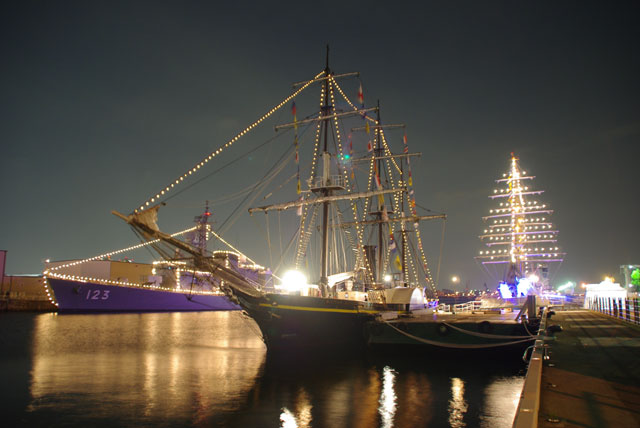
Yokohama's port opened in 1859, and this year it is celebrating the 150th year since the occasion. As part of the celebrations, the EXPO Y150 event is currently being held at the Yokohama port area. At this EXPO, they display historical artifacts, Yokohama goods and famous attractions of the city. The theme of this EXPO is "Set to sail," symbolizing how Yokohama started from here and how it will continue on into future.


This EXPO is held in three areas: the Minato Mirai area representing the "sea," Yokohama station representing the "city," and the Yamashita Park area, which represents "nature." In these three areas, different events are held that link to the theme each area has.

Since the EXPO is celebrating the opening of the port, the event's main galleries and exhibits are shown at the "sea section." The exhibitions are further separated into three main halls; Y150 Forest of Beginnings, Y150 Tomorrow Park, NISSAN Y150 and Super Hi-Vision Theatre.

Each hall holds many different exhibits. Forest of Beginnings focuses more on the history of Yokohama city and how it developed into one of Japan's creative hubs.

Tomorrow Park focuses on entertainment and Yokohama's visions of the future. Here you can see a special sci-fi short film produced just for the event as well.

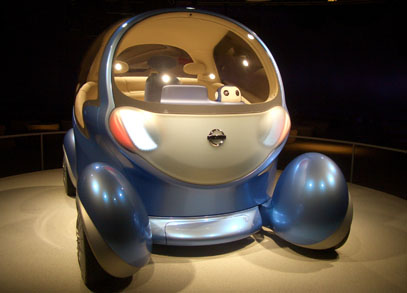
Last but not least, the NISSAN Y150 Super Hi-Vision theatre focuses more on “experiencing” the future. Visitors can get a hands-on experience with the futuristic Nissan car, Pivo 2, in addition to a new hi-vision home theater program.

After exploring the "sea area," the city area will guide visitors through the usual tour sights of Yokohama. For the event, local businesses and citizens have also become very involved, tying up their products and shops with the whole event. As a result, most stores and restaurants offer discounts/or gifts when you present your tour map or entry ticket.

Furthermore, the Hillside will open in July and will feature the "nature" exhibits. The theme of this section is to connect people to people, people to nature, and people to the earth.

The EXPO's overall mascot is called "Tanemaru," who is a combined creature, made of half seed and half ship. This character is said to represent the camphor tree planted in the Yokohama's courtyard in 1859, which explains the choice of this unique looking mascot.

The entire EXPO Y150 event will be open until September 27, 2009. I guarantee it would be a fun and educational experience about both the history and future of Yokohama, so head on down there to see the wide variety of events that would cater to guests of all ages and nationalities!

Related Posts

Related Posts with Thumbnails